|
THE LIFE WE CHOSE WILLIAM “BIG BILLY” D’ELIA AND THE LAST SECRETS OF AMERICA’S MOST POWERFUL MAFIA FAMILYBY MATT BIRKBECK ‧ RELEASE DATE: JULY 11, 2023 A fresh tale of “mafia royalty.” Even readers well versed in true-crime tales may not have heard of the Bufalino family, headed for decades by Russell Bufalino (1903-1994), “arguably the most powerful and important organized crime figure of the twentieth century.” Bufalino was known as a fixer, the guy who would broker a truce between warring factions or persuade a recalcitrant manufacturer why he should break with the Teamsters. As veteran investigative journalist Birkbeck writes, Bufalino and lieutenant and surrogate son Billy D’Elia were strongly implicated in the disappearance of Jimmy Hoffa, and Billy had tales to tell—not that he told them, at least not to the feds. There were plenty of things to talk about, many full of tangles: Russell was an initial protector of Hoffa, though he warned him that it was a mistake, after a jail term for jury tampering, to try to regain leadership of the union after having made a deal with federal prosecutors to the contrary. On the dirtier side of things, mobster pariah Joey Gallo may have run afoul of Russell just ahead of having his head blown off in a Little Italy restaurant, about which Billy mildly remarks, “Russell? He never said anything about Gallo being killed. Nothing. And I didn’t ask him.” Throughout, the quotidian details of mob life are fascinating. Regarding the so-called poultry wars of the 1980s, for instance, there was a good reason why a leading manufacturer ran an ad proclaiming, “It takes a tough man to make a tender chicken.” Even more intriguing is how Russell, the quiet don, became a central inspiration for Mario Puzo and then Marlon Brando’s Godfather, while D’Elia, putatively a waste-management consultant, was an obvious model for Tony Soprano. An eye-opening look at the ordinary—and nasty and lethal—business of organized crime.
1 Comment
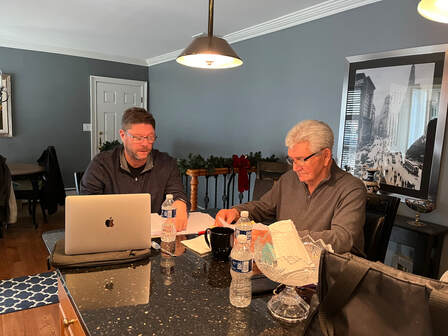 For nearly two years I met with William "Big Billy" D'Elia, the former head of the Bufalino Crime Family, for my next book
THE LIFE WE CHOSE: WILLIAM "BIG BILLY" D'ELIA AND THE LAST SECRETS OF AMERICA'S MOST POWERFUL CRIME FAMILY. It will be published next spring/summer 2023 by William Morrow/Harper Collins. Mauro DiPreta is the editor, and the book was completed in May. Billy spent nearly 30 years at the side of Russell Bufalino, who was arguably the most powerful gangster of the 20th Century. Bufalino considered Billy his son, and their story is remarkable. This is Billy and I earlier this year at the Pennsylvania home of the Godfather himself, Russell Bufalino. More to come. 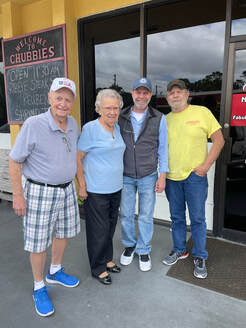 Steve Patterson (center) with his uncle Jim Chipman (right) and grandfather Chip Chipman (left). With the massive success of Girl in the Picture (still the #1 movie in the world on Netflix) I’ve received what seems like a million questions from viewers around the world. Many are about Franklin Floyd and if he's the biological father of any of Sharon/Suzanne's children. He's not.
I've also heard from viewers as well as readers of A Beautiful Child and Finding Sharon asking about the mysterious “baby Philip,” the infant supposedly given away by Sandra Chipman Brandenburg (Sharon/Suzanne’s mother) back in the 1970s. We tell the story of Philip in the final episode of the five-part podcast that accompanies the film on Netflix's "You Can't Make This Up." But here's some more detail. It was really just a whisper of a story, one that sort of floated out there for a while for years. It went like this. Sandra was living in North Carolina in the spring of 1974 when she met “Brandon Cleo Williams” (a.k.a. Franklyn Delano Floyd). Her three small daughters had just been removed from her home, but she was pregnant and gave birth to a boy, Philip. Some people heard the story, most didn’t. And no one knew if it was true. FBI agents Scott Lobb and Nate Furr didn’t believe it after interviewing Floyd in 2014. Floyd denied it, so they dismissed it. Allison Sevakis, Suzanne’s sister, told me in 2017 she did remember an infant boy, and that his name may have been Philip. She was only four years old at the time, so there wasn’t much of a memory. (Allison tells her story about the baby, her mother Sandra and what she remembers about Suzanne’s abduction in Finding Sharon). Baby Philip remained a mystery, a name that popped up over the years every so often, mostly for conversation. But on March 7, 2019, I received a message via Facebook. Hello, I have a question for you. I think I may have been in one of your books. My dad died last Sunday and my adopted mother told me my real last name last night. This all sounds strange. I just need some answers and I think you may be able to help me. It was from a Steve Patterson, and he said he believed he was the long, lost baby Philip and had so many questions. After hearing from Steve, I reached out to Scott Lobb in Oklahoma City. I told him about Steve’s message and asked if he could facilitate a DNA test. Lobb never bought into the story of the missing infant, but to his credit he said sure. It would take months to get a result, so during that time I learned a little bit more from Steve. He said he was born, raised and still lived in North Carolina. His father had died in early March 2019 and his mother, Mary, took him aside to show him some documents. His real name, she told him, was Philip Brandenburg. Mary explained that years earlier she had met Sandi Brandenburg. They had lived in the same county in North Carolina and had been in the hospital together. Mary had just lost another pregnancy and was distraught, while Sandra, who couldn’t care for the three daughters she already had, was pregnant again with a fourth child. Several weeks had passed when Sandi suddenly showed up at Mary's door with a baby boy in her arms. She explained that she was leaving town with her new husband and three daughters (she regained custody) but she couldn’t take care of an infant. Mary recalls seeing Floyd lurking in the distance watching as Sandi gave Philip to her and left town, never to be seen again. Mary changed his name to Steven and she raised him with her husband as their own. Steve said he’s had a good life, and still does, but it was turned upside down after his father died. He said he needed to know for sure if he was, in fact, Sandi’s biological son. It would take nearly a year but in February 2020 Steve called me to say the DNA result was in: He was indeed Sandi’s son, and Suzanne’s little brother. I met Steve last year in Virginia while filming Girl in the Picture, and I liked him a lot. Quiet spoken, thoughtful and down to earth, he was still trying to process the entire story. By then he had already connected on the phone with his uncle Jim Chipman, Sandi’s brother, and was planning to travel to Florida to meet Jim and Jim’s father Chip Chipman – Steve’s grandfather. The visit went so well that Steve sent me a photo (above). Steve has also reached out to Suzanne’s biological daughter Megan – his niece – and her mother Mary and they remain in contact. Connecting different family members who didn’t know they existed has been among the most rewarding parts of this story. Aside from Steve forging new relationships with the Chipman’s, Megan remains close with her grandfather Cliff Sevakis and his wife Jen, who flew in from the west coast to attend her wedding in November. It was quite a sight to see Cliff and Megan dance together, much like it was to see the photo of a smiling Steve hanging with his uncle and grandfather. He looked like he finally found some answers, and some peace. Following his murder conviction in LA, charges are brewing in NY against Robert Durst for the disappearance of his wife Kathie.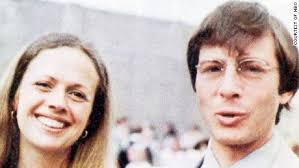 It was some months after HBO’s The Jinx aired in 2015 when I first spoke with John Lewin, the erudite deputy district attorney in Los Angeles who just put Robert Durst in jail forever. Lewin is a cold case specialist. No, make that a master, with a reputation for doggedness and laser focus, traits that were so clearly apparent in his successful Durst prosecution. Lewin laid out his strategy to me back then, explaining how he was going to show that the 1982 disappearance and presumed murder of Durs'ts then-wife Kathie and the subsequent dismemberment of the drifter Morris Black in 2001 were connected to Berman’s 2000 murder. Berman's was such a cold, fiendish murder. She had no idea what was about to happen when he put the gun up to the back of her head and fired. I remember back to November 2000, when I was working on my first Durst piece for People magazine and all of Kathie’s old friends said I had to find Susan Berman. She was the key, they said. I was working on a tight deadline and though I tried, I couldn’t find her then. But I remember the call that first week in January 2001, when all I could hear was a woman screaming, “She’s dead! She’s dead!” It was Gilberte Najamy, one of Kathie’s friends. I called Joe Becerra, the NY State Police detective whose gut instinct working off a tip restarted the Durst saga in 1999, yet for some reason he's become a lost character in all this. Yes, he said, he was planning to go to LA to interview Berman but he just got off the phone with the police there. Susan Berman was dead. Lewin knew what he wanted to do, only it was complicated, he said. Relying on circumstantial evidence from one case is difficult enough to convict someone of murder. But connecting three cases? Lewin knew the challenge, and he met it. If there were awards for lawyers like there are for actors, he’d win several, hands down. But in convicting Durst for the Berman murder, he laid a roadmap for Westchester County District Attorney Miriam Rocah, with some of that asphalt coming my 2002 book A Deadly Secret. Lewin and I discussed the book at length, and he was particularly interested in Kathie. It was the linchpin to his prosecution, he said, proving that Berman had to die because she knew the truth about Kathie’s demise. Berman was a central figure who served as Durst's spokeswoman in the weeks following Kathie's disappearance. She knew that Durst killed Kathie on a Sunday night, dismembered her body under the glare of a blue light seen by neighbors, and then drove down to southern New Jersey on a Tuesday to bury her remains in the Pine Barrens. Mike Struk, the imperfect New York City police detective who followed the trail to the Pine Barrens in 1982, pressed to charge Durst. But prosecutors didn't do circumstantial cases then. No body, no crime. But that didn't deter Lewin, who believed it and wanted to prove it. And he did just that during the trial. But proving Kathie’s murder doesn’t count in a LA courtroom. It will in Westchester County where Rocah, I'm told, has been gathering her resources while awaiting a verdict in LA for a Durst prosecution in NY. An official announcement should come soon, I'm told. And that’s all Kathie’s family ever wanted. Justice. They’ve waited long enough, nearly 40 years, and they sort of got it in LA. Now, they want to see a final end to the Durst story once and for all. 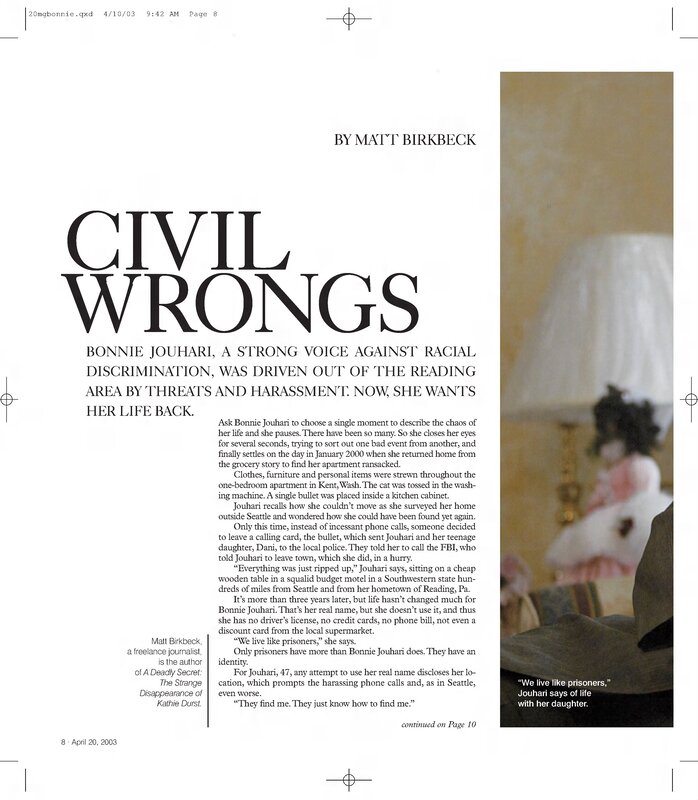 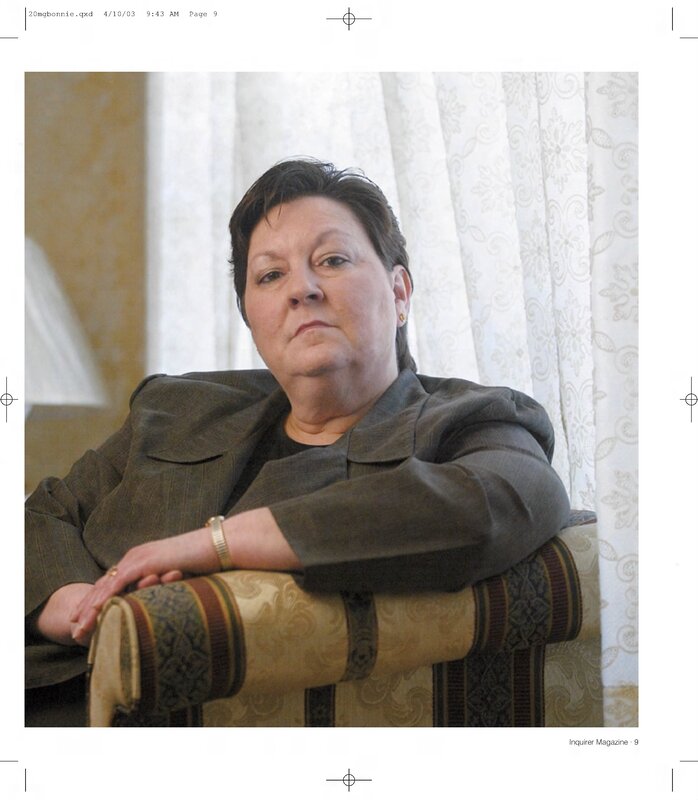  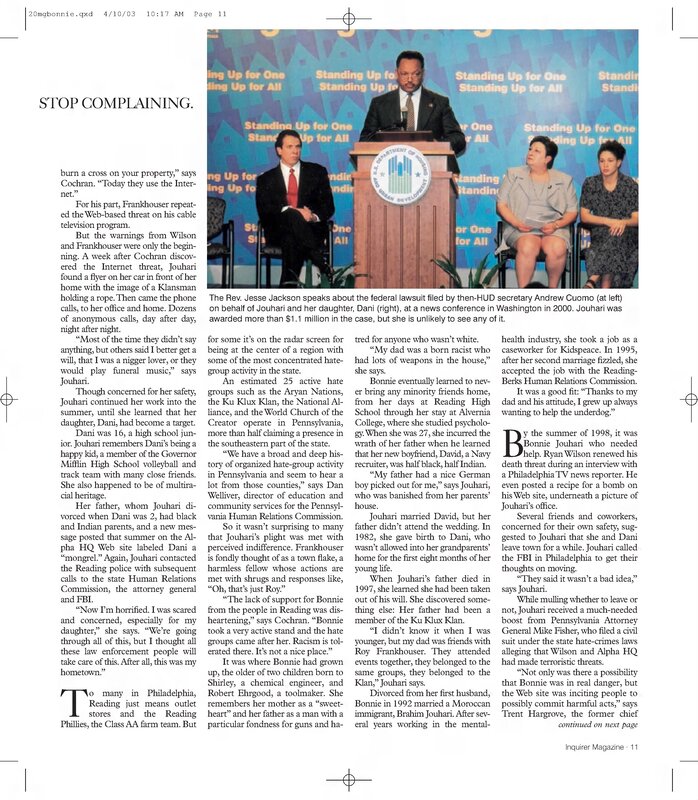 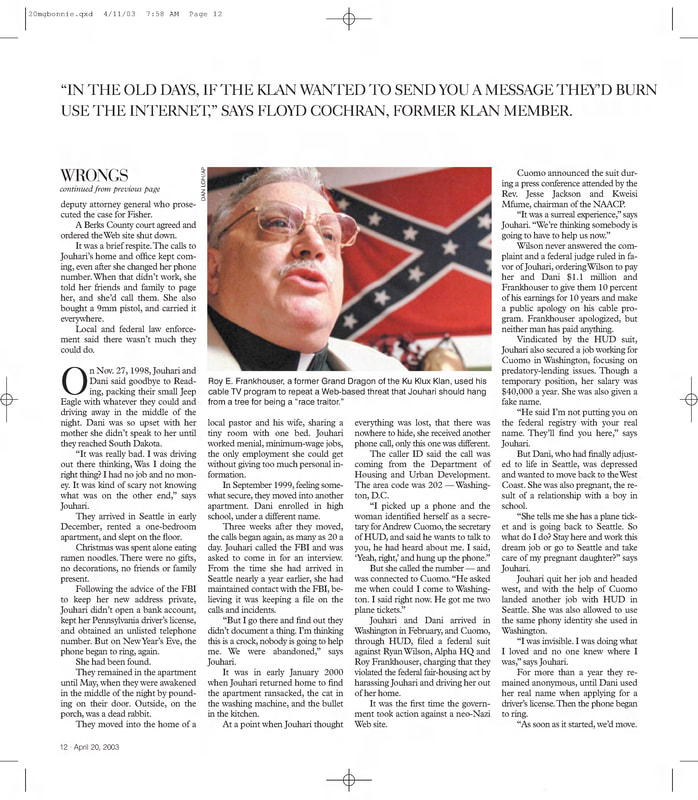 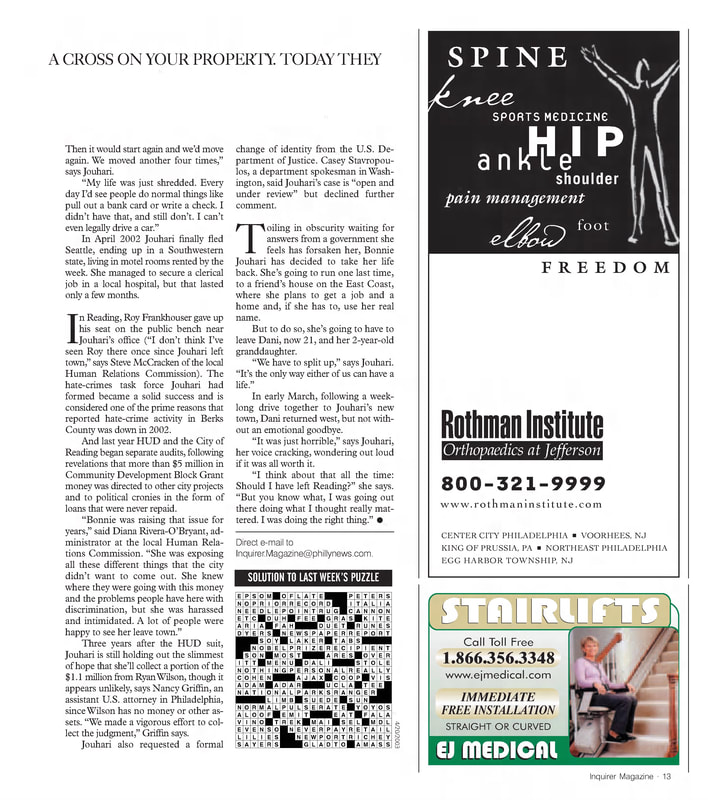 This story was first published in the Philadelphia Inquirer in April 2003. Jouhari's daughter Pilar was shot and killed in San Antonio in 2015. A former Army medic, Pilar's life changed forever when she was forced to leave Pennsylvania with her mom.
In 2003, I reported about a missing 16-year old, Karen Mitchell, who vanished without a trace from Eureka, California. Years later, some new leads as Robert Durst's trial finally resumes. In March of 2015, amid the hoopla following the last episode of HBO's The Jinx, then-FBI director James Comey announced that he was ordering every FBI bureau in the U.S. to review its cold cases and check against the known locations of one Robert Durst amid suggestions that he may very well be a serial killer. "I know that we are doing a number of things in different field offices to run down leads," said Comey. "That is one of the powers of the FBI. We're everywhere in the United States." Well, maybe not everywhere. The truth is that with Durst locked up in Los Angeles awaiting the resumption of his trial this month for the murder of his friend Susan Berman, the press lost interest as did the FBI, which did very little, if anything, to follow up on Comey's grand statement, which followed claims I had long made regarding Durst and the possibility he was a serial killer. Of course, if you do the math you can say he already qualifies, having killed Morris Black (which he admitted) as well as Berman and his first wife Kathie Durst (both of which he's denied). But there are more. That, I'm certain of. (After all, the man knew how to expertly dismember a human body). But the one case that's always bugged me is the one involving Karen Mitchell, a 16-year old girl who simply vanished from Eureka, Calif., in November 1997. I reported on Mitchell in 2003 after visiting that beautiful wasteland known as Humbolt County. Known as the pot capital of the world, it made sense that Durst would live there given his lifelong love of marijuana. But its remoteness was also a lure. It's about five-hours north of San Francisco, and his home in nearby Trinidad was on the coast where the ocean views were simply stunning. I was in Eureka back then and talked about Durst and Mitchell with the police chief, who told me about a witness who, months after Mitchell disappeared, had come in to tell a strange story. It was about spotting a girl that looked like Mitchell getting into a light blue, late model car with an older man. The witness provided a composite that was the spitting image of Robert Durst (right down to the wide-rim glasses). It was so exact the police believed that witness, Randy Gomes, had known Durst. They didn’t know how or why, but they were pretty sure he knew him. But they never thought to ask Gomes, who quickly took off for Idaho, where he remained for years. When he eventually returned to Humbolt County, it wasn't the FBI that tracked him down for questioning. It was NBC's Dateline program. Gomes, I'm told, became an emotional mess when approached in 2015 by the Dateline producer, who thought he was hiding a terrible secret. Gomes made it through the interview (see above) certain of his identification of the man in the car. And it’s clear to me that the reason he was able to give the stark composite so long ago was because he did know Durst. He simply had to. So combine that with some of the other circumstantial evidence - such as Durst spotted dressed in drag inside a shoe store that Mitchell's aunt had owned; that Mitchell worked at a local soup kitchen (a place favored by Durst); and that a worried Durst, believing he was going to be charged after I reported the Mitchell connection in 2003, was told by his defense team to put it aside and focus on the upcoming Morris Black trial - and that’s a lot to chew on. Now, a young documentary producer from the Eureka-area, Joshua Griffin Diaz, has been poking around on Mitchell, and he’s adding to the list of interesting circumstantial evidence. Most notably, an interview with a “tech guy” who helped Durst with his computers places a young woman who looked “exactly” like Mitchell inside of Durst’s Trinidad home working for him as a domestic. That one rang all kinds of bells and whistles for me because Mitchell’s aunt, during her Dateline interview, said her niece often visited Trinidad. "Jen used to go to Trinidad on the bus," said Annie Casper. "I mean, they could have met. It's definitely a possibility." That leads me back to Randy Gomes, who just a few months after his Dateline interview was arrested in Humbolt County for felony possession of a firearm as well as cultivating and selling marijuana. According to the police, Gomes ran a large pot farm and marijuana, you recall, was Durst’s favorite pastime. So if there’s a Gomes connection to be had, you can start looking there, and then go catch up with that tech guy. Can someone tell that to the FBI? 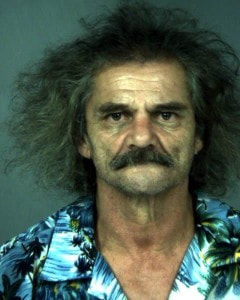 Randy Gomes following his 2015 arrest.
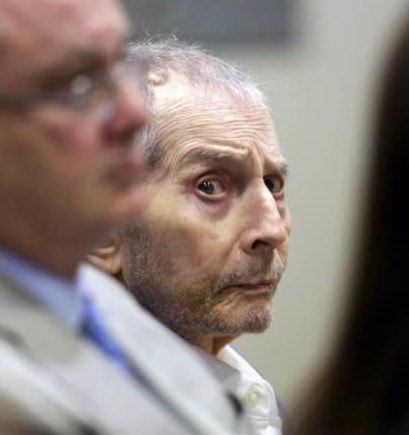 OPENING ARGUMENTS This is going to be a very long trial and my plans are NOT to do a daily play by play, but I already heard a few things during opening arguments from prosecutor John Lewin and Durst attorney Dick DeGuerin that have me scratching my head. So, for those of you pinging me for my thoughts thus far, here are a few items to consider. LEWIN: SUSAN BERMAN TOLD DURST THAT THE LA POLICE WANTED TO INTERVIEW HER. Say what? That was something Lewin referenced to Durst, who said that during “The Jinx.” But it was something Durst spit out under duress, and I knew then he was lying (It made zero sense for the LA police to be involved in a renewed NY investigation, particularly since NY didn’t reach out to interview Berman until Jan. 5, 2001, nearly two weeks after Berman was killed). How Lewin made the jump to Berman actually saying that to Durst is beyond me. But let’s see if he circles back to it. He has five months. DEGUERIN: DURST FLED TO GALVESTON IN 2000 BECAUSE OF THE EVIL JEANINE PIRRO. This one is easy to unpack. It’s from DeGuerin’s 2003 narrative at the Morris Black trial, the one where Pirro relentlessly pursued Durst via the media, forcing him into hiding. Poor Bob, said DeGuerin. IT NEVER HAPPENED. The problem then was the Galveston prosecutors were too dumb, timid or both to lay down the truth, which was Jeanine Pirro didn’t spend much time on the Durst case until long after Durst arrived in Galveston, and AFTER her detective Joe Becerra learned that Susan Berman had been murdered (for those paying attention, yes, that was Jan. 5, 2001). It was learning about the Berman murder when she seized the airwaves and went nuclear on CNN, FOX and every other network and newspaper she could find. Lewin appears to be very competent prosecutor, so let’s see if he destroys this old fairy tale. DEGUERIN: DURST DRESSED IN DRAG AND PRETENDED TO BE A MUTE IN GALVESTON TO PROTECT HIS IDENTITY. So, as I wrote in A Deadly Secret, Durst had already had the drag thing down pat, having done it years earlier in Eureka, Calif. For those who read the book, you’ll recall that Durst had a house in nearby Trinidad in the mid-90’s and was seen inside a woman’s shoe store dressed in drag and silent. That store happened to be owned by the aunt of Karen Mitchell, the teen who went missing in 1997 not long after Durst’s unveiling there. Mitchell, who lived with the aunt and worked at the store, also volunteered at a local soup kitchen (one of Durst’s favorite haunts). Durst thought he was going to be indicted when I first reported the Mitchell connection (just look at the police composite of the man she was last seen with and you'll know why). He also stopped wearing the wide rimmed glasses. Lewin knows the truth on this one too. He told me he wasn’t bringing in any of the other missing women linked to Durst, but let’s stay tuned here too. DEGUERIN: DURST WILL TESTIFY. I can see Lewin licking his chops over this unexpected treat. Durst testified during his 2003 trial and, thanks to DeGuerin, that crazy (or paid off) jury actually felt sorry for him. That won't happen with Lewin. While the nation has pretty much given a collective yawn to this trial so far, Durst taking the stand would give it some juice. 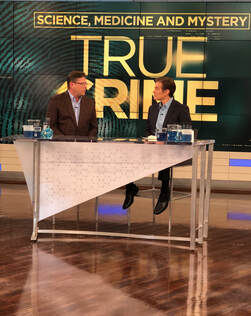 For the New Year I'm breaking out of my self-imposed social media cocoon, something that was suggested long ago (why not speak to your audience, I'm told. It's easy, and they want to hear from you). I'm not sure about the last part, but given the interest in many of the subjects I've written about, and some news to share that goes with it, why not.
Starting with the news, a mention that I'll be on the Dr. Oz show on Jan. 9 to discuss Robert Durst and my book A Deadly Secret. Ellen Strauss, a close friend of Kathie Durst, also appears. And speaking of Durst, we begin the blog revival with word today that his attorneys are admitting he authored the infamous and anonymous "cadaver letter" sent to the police back in 2000 alerting them to a dead body in a Beverly Hills home. Of course, the body was his good friend Susan Berman, who had been shot in the back of the head. And yes, we all knew years ago that Durst had written and sent the letter (and had killed Berman). But now on the eve of a five-month murder trial where he's facing forever in prison, Durst's attorneys thought for some reason it was a good idea to finally cop to the letter. And that tells me he's cooked. I wasn't so sure before (I gave John Lewin, the prosecutor on the case, a 50/50 shot at a conviction). But the latest development tells me the odds on Durst beating a murder charge are not good, and I'm wondering if there's a plea deal in his future (Durst agrees to tell all about the murders of Berman, Kathie Durst, Morris Black and any others, like Karen Mitchell in Eureka, Calif., in exchange for a nice comfy prison hospital, where psychiatrists can probe his brain to see where the wiring went wrong). That's probably more of a hope on my part than a possibility, given he has a $100 million to throw at his attorneys. But Durst seemed to be OK with the idea of a lush prison environment following his arrest in 2015, and perhaps the realization that he could be stuck in a maximum security cell under 23-hour lockdown is enough to consider the plea. Stay tuned. And speaking of staying tuned...will have news on the previously announced podcast for A Beautiful Child and Finding Sharon along with some more exciting news about that project. (If you haven't read Finding Sharon yet, I suggest you do so. Ties up all the loose ends of ABC, including the FBI's devastating interviews with Franklin Floyd, Sharon's true identity, Michael's fate, and the emotional headstone ceremony in 2017. You can order Finding Sharon by clicking here. Also, for those of you on Instagram, click on matthew.birkbeck and follow me there. Like I said, old dog new tricks. 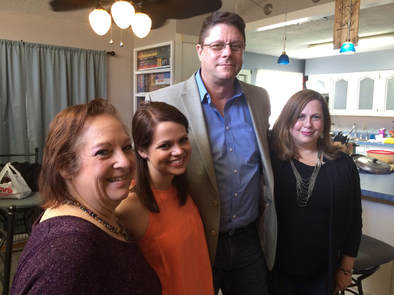 IT was over two years ago, in March 2016, when I finally met Megan DuFresne. It was for the taping of the Investigation Discovery "20/20 on ID" program, "The Mysterious Life of Sharon Marshall," and I flew down to New Orleans to meet with Megan and her mom Mary. I explain in my new book FINDING SHARON how Mary and I found each other, which was back in 2005. So this was a long time coming. And as you can see in the photo above, with (from left) Mary, Megan, me and Jenny Fisher, we were all pretty thrilled to finally meet in person. A year later we would all get together again in Oklahoma to change the gravestone of Megan's biological mother, who for years we knew as Sharon Marshall but whose real name was Suzanne Sevakis (Megan was the newborn baby given up for adoption in 1989 after Sharon and Floyd, now Tonya and Clarence and married, fled Florida on their way to Tulsa).
These were events (learning Sharon's true identity, finally meeting Megan, changing the gravestone, etc) that for a long time I never dreamed would happen. But they did, and to find out how you'll have to read the new book. Suffice to say this was years in the making, and what made it happen were all of you who read A Beautiful Child. The story of Sharon Marshall captured so many hearts, and produced so many tears. It was you, the reader, who over the years kept her story alive with all of your emails, questions, postings here and on other websites. And that interest and devotion lead the National Center for Missing & Exploited Children and the FBI to do the impossible - find Sharon's true identity. So, to all of you, I want to say thank you. This is my sixth book, and as a sequel FINDING SHARON tells another remarkable story, so I hope you all spread the word about this new work (and this blog post). There were many lows covering this story over the years. There were also many highs. And as you can see in the photo above, some of those highs were great. |
Matt Birkbeck's Blogspot
Archives
March 2023
Categories
All
|
 RSS Feed